Does Junkdoor donate or recycle items?
Junkdoor donates or recycles eligible items as part of a responsible material routing process that prioritizes recovery before final disposal whenever item condition and local channels support it. This is a core best-practice principle in professional junk removal because not all removed items belong in landfill disposal. Reuse and recycling improve resource efficiency and create a stronger environmental outcome than direct dumping alone.
Compared with disposal-only hauling, a recovery-minded removal process creates more value from the same pickup. Usable furniture, certain appliances, metals, cardboard, electronics accepted by local programs, and other recoverable materials can often be diverted into donation or recycling streams. This reduces landfill volume and improves the overall efficiency of the junk removal chain. In measurable terms, even partial diversion produces a better material outcome than sending 100 percent of the load to disposal.
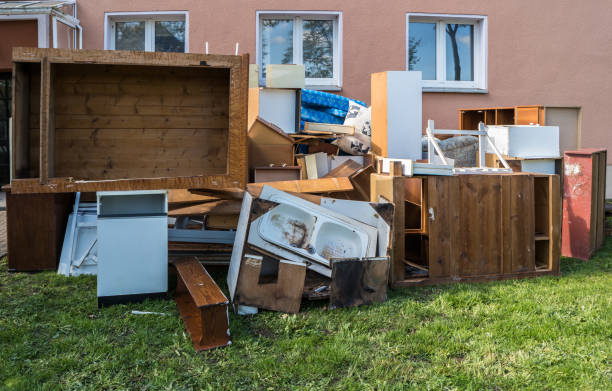
Donation and recycling are especially important on large cleanouts where mixed materials are present. A property cleanout, office clearance, or move-out can include a combination of reusable goods and recyclable commodities alongside disposal-only waste. Sorting these categories appropriately creates a cleaner, more responsible service profile. It also aligns with customer expectations for professional junk removal that goes beyond simple haul-away.
The comparison with unmanaged disposal is clear. When customers self-haul large mixed loads, convenience often pushes everything into one waste stream. Junkdoor improves on that model by using a structured service process that identifies eligible materials and routes them through more appropriate recovery channels where available. That raises the quality of the service and supports more responsible waste handling standards.
Junkdoor therefore treats donation and recycling as a defined part of responsible junk removal operations. Eligible items are directed toward recovery instead of default disposal whenever feasible under service conditions, creating a better outcome for customers, communities, and overall material management.
- Eligible reusable items can be donated
- Recoverable materials can be recycled
- Mixed loads benefit from sorting and routing
- Landfill-only disposal is not the preferred first option
- Responsible material handling strengthens service quality
- Collect and load the removal items
- Identify reusable or recyclable categories
- Separate recovery-eligible materials
- Route items to donation or recycling channels where applicable
- Dispose of non-recoverable material properly
| Material Path | Best Use | Outcome |
|---|---|---|
| Donation | Usable items in good condition | Extends product life |
| Recycling | Recoverable commodity materials | Reduces landfill volume |
| Disposal | Non-recoverable waste | Final removal completion |
| Mixed-load sorting | Large cleanouts | Better material routing |
| Responsible hauling | All service categories | Stronger overall service standard |